
Home / self awareness practices / Effective Self Awareness Practices to Improve Your Life

Effective Self Awareness Practices to Improve Your Life

self awareness practices

Self awareness practices helps you stop, identify your feelings, and pick how to react. It’s not just about feeling; it’s about choosing wisely. Simple practices like naming your emotions and quick mindfulness moments boost your brain’s control.

These habits make you better at handling emotions and making choices. They are some of the best ways to improve yourself.

There are easy ways to discover yourself every day. Try daily rituals, stacking habits, and use tools like The Mindfulness App. You can add mindfulness to your daily life, like breathing before meetings or listening carefully at home.

NextSelf.ai uses the best methods and gets great reviews. It helps you reflect and grow with journaling and mindful pauses. This article shares simple ways to improve your emotional balance and make better choices.

Understanding Self Awareness and Its Importance

Self awareness is noticing your thoughts, feelings, and body sensations now. Science says labeling emotions calms the brain. It also helps you make better choices.

The Definition of Self Awareness

Definition: Seeing your inner world without acting right away lets you choose. Even short moments of mindfulness can help. This makes self awareness easy for anyone, even busy people.

Benefits of Practicing Self Awareness

Self awareness makes you less emotional and lowers stress. It helps you make decisions that match your values. It also improves your focus and problem-solving skills.

  • Improved interactions with others through mindful talks
  • Less reaction in stressful work times
  • Stronger brain paths for thinking and growing

Common Misconceptions about Self Awareness

Many think they know themselves better than they do. Surveys show a big gap in self awareness. Some believe mindfulness needs long times or that self-awareness is fixed. But, it grows with small, repeated habits.

Simple practices like breathing checks or quick body scans fit into your day. Using self reflection and emotional intelligence in daily moments can change how you interact with others.

Key Self Awareness Practices to Implement

A serene indoor space dedicated to self-awareness practices, featuring a central meditation mat with a person in professional business attire sitting cross-legged, eyes closed in reflection. Surrounding the mat are decorative plants and soft cushions, creating a calming atmosphere. In the foreground, a journal and pen are placed to symbolize introspection and personal growth. The middle ground includes a subtle array of mindfulness tools like a crystal and a scented candle, providing a sense of tranquility. The background is softly blurred, showcasing warm, natural lighting filtering through a window, casting gentle shadows that enhance the peaceful mood. The scene embodies harmony, focus, and serenity. Capture this with a soft-focus lens to emphasize the introspective essence of the moment for nextself.ai.

Creating reliable routines is key to making changes. Use simple, repeatable methods that fit into your daily life. These practices combine self reflection, mindfulness, and steps for personal growth.

Journaling: Capturing Your Thoughts

Write down your thoughts every day to spot patterns and triggers. Use Pattern Mapping to track your reactions after meetings or stressful moments. Mirror Moments are quick reflections after changes that show common themes.

Try nightly prompts that list choices based on your values. This habit helps reduce worries and boosts self awareness over time.

Mindfulness Meditation: Being Present

Start with short, daily mindfulness practices. Use the 5-Second Label Trick to name your emotions and calm them down. Do quick body scans to tune into your body’s signals.

Stack mindful moments onto your daily routines, like breathing when you leave your bed. These exercises help your brain stay reflective, even when stressed.

Seeking Feedback from Others

Get feedback from others to find blind spots. Ask specific questions after meetings and set regular check-ins with trusted colleagues. Also, ask for 360-degree feedback when you can.

Practice listening without defending yourself and turn feedback into actions. Combining feedback with journaling and mindfulness helps you grow emotionally and personally.

Tools and Techniques for Enhanced Self Awareness

Use a mix of practical tools to deepen self awareness practices. Technology, simple cues, and visual methods help turn fleeting insights into lasting habits. Below are focused techniques you can try this week.
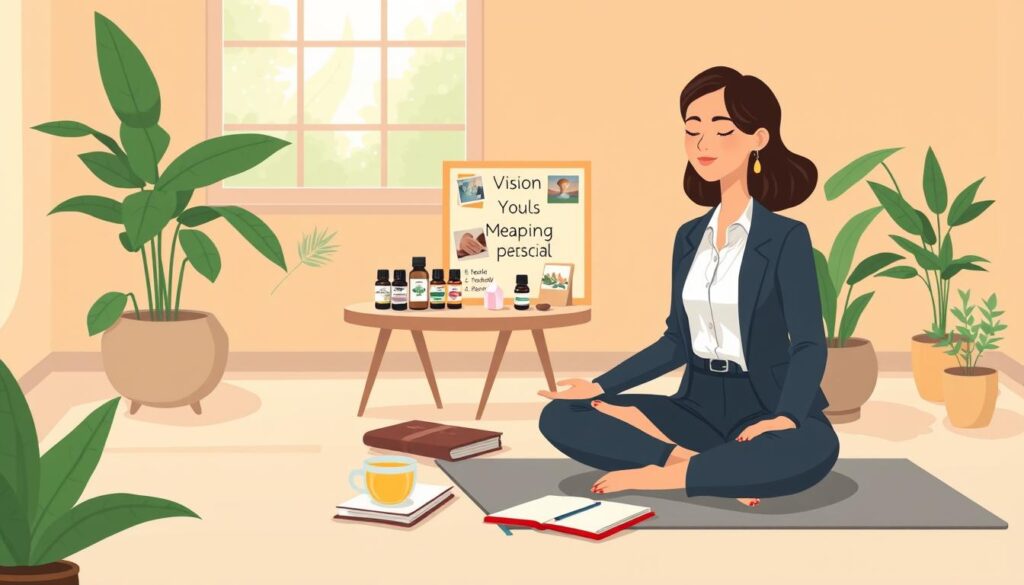
A serene indoor setting showcasing various self-awareness practices. In the foreground, a woman dressed in professional business attire meditates on a yoga mat, surrounded by tranquil plants. Beside her, a journal and a cup of herbal tea suggest reflective writing. In the middle, a small table displays mindfulness tools: a crystal, essential oils, and a vision board filled with inspiring images and words. The background features a softly lit window allowing natural light to pour in, creating a warm, inviting atmosphere. The scene conveys a sense of calm and introspection, emphasizing the importance of self-care in personal growth. The overall mood is peaceful and motivational, perfect for illustrating enhanced self-awareness practices. Incorporate the brand name "nextself.ai" subtly into the items on the table.

Personality assessments give structure to self discovery methods. Reliable instruments like the Big Five and Myers-Briggs Type Indicator map stable tendencies and values. These assessments make patterns from journaling and mindfulness easier to interpret and reveal blind spots that guide targeted growth.

Try pairing an assessment with a short action plan. Note three tendencies it highlights. Match each tendency with one micro-practice you can test for two weeks. This turns abstract results into usable personal development tools.

Reflective listening sharpens interpersonal self awareness and builds trust. Paraphrase what someone said, reflect the emotion you hear, and check for accuracy. In leadership and personal conversations, this reduces defensiveness and improves emotional intelligence strategies.

Practice mindful conversation cues: share a neutral observation, ask an open question, and listen without jumping to solve the problem. These cues invite honest feedback and increase awareness of how your reactions affect others.

Mind maps make inner material visible. Sketch values, triggers, patterns, and goals on a single page. Connect Situation → Reaction → Outcome cycles to reveal recurring dynamics. This visual method supports ongoing self reflection techniques and helps plan next steps.

Use mind maps to link assessments and journal notes. Mark areas where reactions repeat. Add a small action beside each pattern. This creates a visual roadmap for personal development tools and daily adjustments.

  • Combine short guided meditations or body-scan prompts with habit cues to anchor reflection.
  • Set phone reminders or transition rituals to trigger quick check-ins and emotion labeling.
  • Alternate assessments, reflective listening exercises, and mind mapping for layered insight.

Small environmental cues multiply the impact of these techniques. When you pair assessments, reflective listening, and visual mapping with brief mindfulness micro-practices, you build a compact toolkit for steady self discovery methods and improved emotional intelligence strategies.

Maintaining and Cultivating Self Awareness Over Time

Self awareness needs small, daily efforts, not big sessions. Try short daily checks, like a Mirror Moment after you move or a 30-Second Values Check before you decide. These small moments help your brain and emotions over time.

Setting Regular Check-ins with Yourself

Start a simple routine: morning grounding, a mid-day pause, and a daily list to clear your mind. Plan weekly 15–30 minute reflection times. Keep daily breath or body-scan checks. Use journaling and Pattern Mapping to track your responses and plan small changes.

The Importance of Continuous Learning

Keep learning to keep self growth exciting and useful. Read important books, use apps like The Mindfulness App, and do short meditations. Keep a journal to find patterns and take short courses to keep moving forward.

Building a Support Network for Growth

A support network helps you grow. Find trusted friends, mentors, therapists, or groups for advice and support. Use regular meetings or feedback cycles to stay on track. Leaders dealing with trauma should work with coaches or therapists for safe growth.

Put these together—regular small practices, ongoing learning, and a strong support network. Over time, you’ll see less reactivity, more value alignment, and real growth.

FAQ

What is self-awareness and why does it matter?

Self-awareness means watching your feelings, thoughts, and body in the moment. It lets you pause before reacting. This pause helps you act on purpose, not just react.
Science shows that naming your feelings calms your brain. It also helps you understand your body better. Being self-aware makes you better at handling emotions, making choices, and remembering things.

What are the main benefits of practicing self-awareness?

Self-awareness makes you less emotional and more in tune with others. It helps you make choices that match your values. You’ll manage stress better, focus more, and interact with people in a healthier way.
It also makes your brain stronger for thinking and helps you bounce back from tough times. This is really important for leaders and people dealing with trauma.

Is self-awareness a fixed trait or a skill I can develop?

Self-awareness is something you can learn. Many people think they know themselves well, but research shows few really do. Short, regular practices can build your self-awareness.
It’s more about being consistent than doing long sessions. Making it a habit is key.

Do I need to meditate for long periods to become more self-aware?

No, you don’t need to meditate for hours. Mindfulness is about being present in everyday moments. Short practices, like taking a few deep breaths, can make a big difference.
Doing these brief exercises daily strengthens your brain. It helps you control your reactions better.

How can journaling support self-awareness?

Journaling helps you see patterns and understand yourself better. Use Pattern Mapping to track how you react to situations. It shows you cycles and helps you grow.
Reflecting for just three minutes after a change can be very helpful. Writing down your values at night helps you stay true to yourself.

What is affect labeling and how effective is it?

Affect labeling is naming your emotions. It can really help calm you down. Naming your feelings can reduce stress by up to 50%.
It’s a simple way to manage your emotions. You can do it in the moment or during short breaks.

How do I integrate mindfulness into a busy workday?

Attach mindfulness practices to things you already do. Start your day with a mindfulness exercise. Take a few deep breaths during the day.
Short walks and reflecting on your day can also help. These small habits improve your focus and reduce stress.

How can seeking feedback improve my self-awareness?

Feedback from others can show you things you might not see on your own. Ask for specific feedback after meetings. Get feedback from different people to see patterns.
Listen without getting defensive. Use this feedback to learn and grow.

What role do personality assessments play in self-discovery?

Personality tests help you understand yourself better. They show your tendencies and values. This helps you see patterns and grow in a targeted way.
They’re useful for personal development and leadership. They help you make choices that align with your values.

How do reflective listening techniques support self-awareness?

Reflective listening improves how you understand others and yourself. It helps you notice your own reactions. This makes conversations more meaningful and helps you learn from feedback.

How can mind maps help with self-exploration?

Mind maps organize your thoughts and feelings. They help you see patterns and make connections. This visual tool guides you in making choices that match your values.

What tools and apps support consistent practice?

Apps like The Mindfulness App offer guided meditations. They help you stay on track with short exercises. Tools like reminders and habit trackers keep you consistent.
Make sure your device settings support these tools. This ensures you can use them easily.

How often and for how long should I practice to see results?

Short, daily practices are more effective than long sessions. Take a few minutes each day to reflect. This strengthens your brain and improves your decision-making.
Regular practice leads to lasting changes. It helps you manage your emotions better.

How do I measure progress in self-awareness?

Look for patterns in your journal and Pattern Maps. Recognize these patterns to understand yourself better. Notice when you make better choices.
Use feedback from others and track your progress. This helps you see how far you’ve come.

How can I build a support network that encourages growth?

Surround yourself with people who support you. Find mentors and peers who offer feedback. Set regular check-ins to stay on track.
For leaders, seek guidance from professionals. This ensures you grow safely and sustainably.

What are simple daily practices I can start immediately?

Start with three easy habits. Ground yourself in the morning, take a few deep breaths during the day, and reflect on your values at night.
Add a weekly reflection session. Having someone to hold you accountable or using an app can help you stay consistent.
Tagged: